
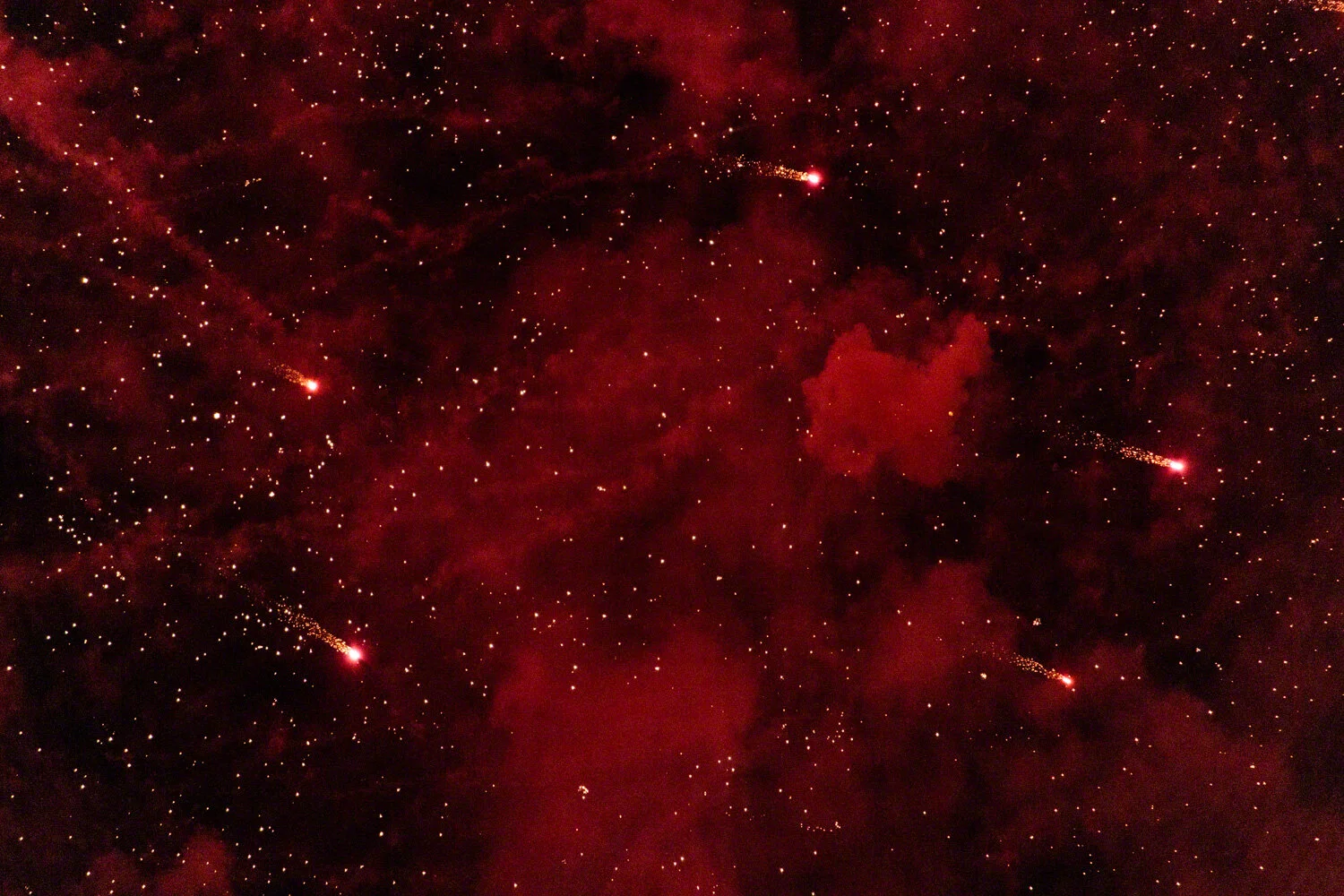
Where there’s smoke
there’s fireworks.
I didn’t set out with this in mind when I first began taking photos of fireworks. I went to a show with the only equipment I had at the time which included a crop-sensor camera, a telephoto lens, and no tripod. I had no choice but to use a fast shutter speed and I couldn’t get any wide shots. But when I saw the results, I couldn’t imagine doing it any other way.
Type ‘fireworks’ into any search engine and you’ll find countless photos all taken with one technique: a long exposure. This makes it look as though there’s one type of firework which, frankly, does them a disservice. Fireworks can be so diverse and spectacular that there are competitions dedicated to them across the world, but unfortunately the photos fail to reflect just how different they all are.
When you freeze a firework in a photo—a moment that’s over in a literal flash—you freeze the way they light up the mounting smoke that hangs in the air. You see textures, colours, the light, and the shadows.
The same way that you can lay down, look up, and find different shapes in clouds…
…a full moon shining through a cloudy night…
…you can look at a photo of a frozen firework and see the heart of an exploding supernova…
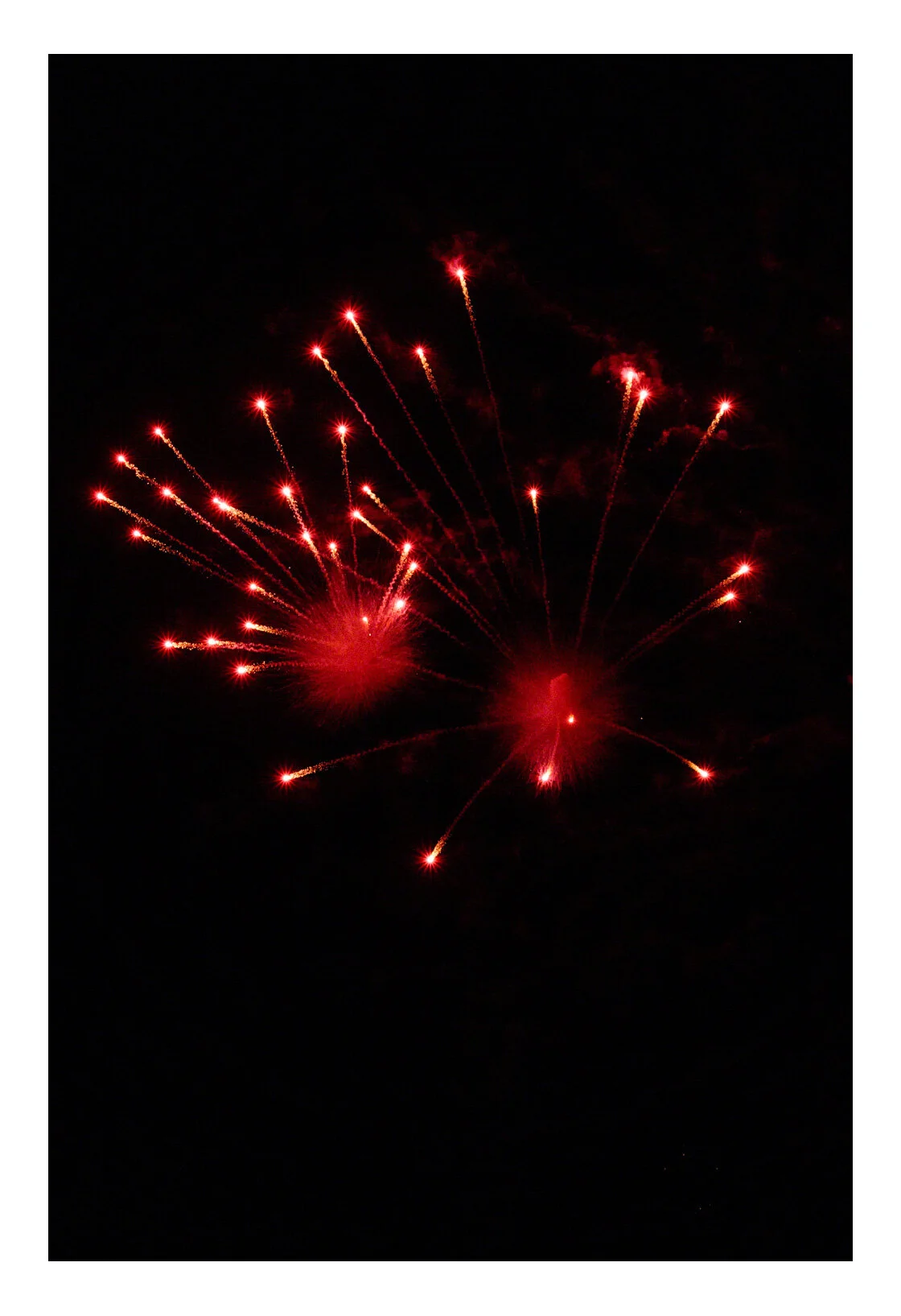
…or even the cosmos itself.
Since I started taking photos of fireworks, I’ve tried to go to displays often, always with a camera in hand—and still no tripod—and each time I see something new in the photos I take. And hopefully, from now on, you will too.
For Fenn